
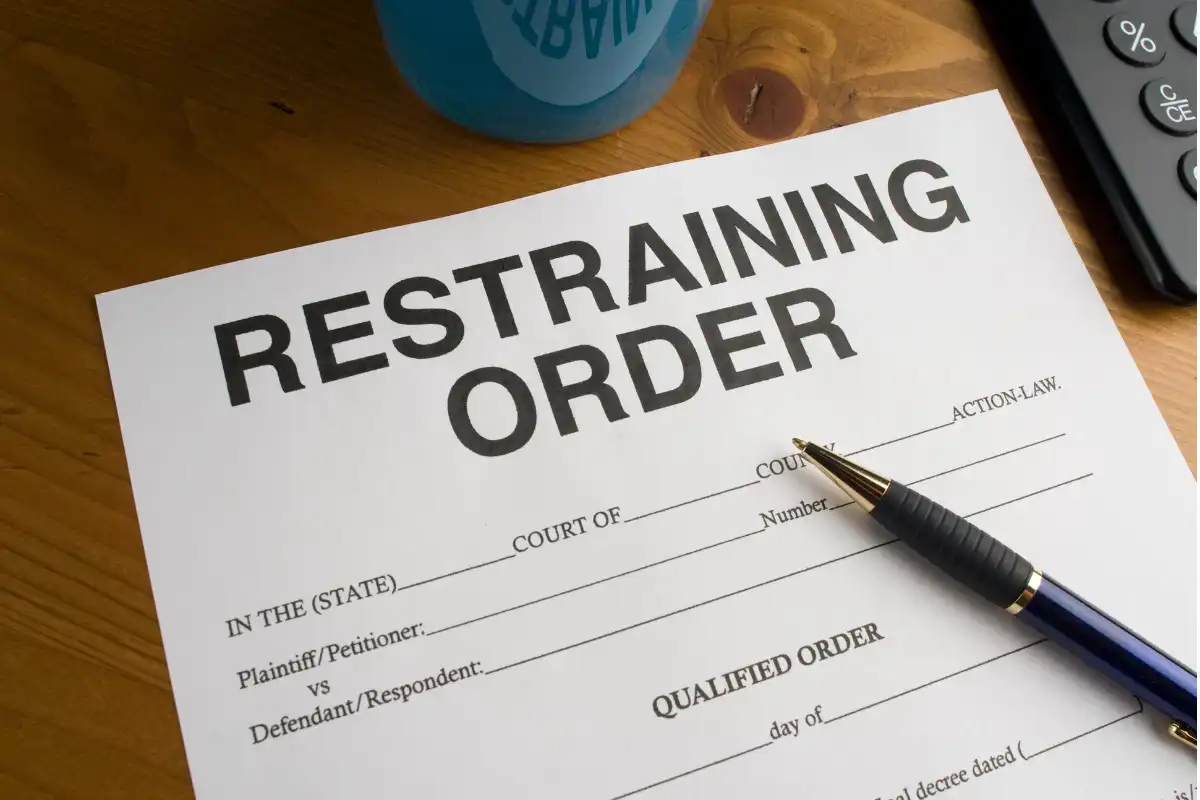
You’re going through a divorce, tempers flare, and now there’s an Order of Protection in the mix. Or maybe things got physical, or you’re scared of what your ex might do next, and you’re the one who needs one. Either way, an order of protection touches both family law and criminal law at the same time, and understanding how it actually works can make an overwhelming situation feel a little more manageable.
What Is an Order of Protection?
Understanding your rights under a New York Order of Protection
In New York, what most people call a restraining order is legally known as an Order of Protection. It’s a court order that tells one person what they can and cannot do in relation to another person. That can mean staying away from someone’s home, workplace, or school, or it can mean simply not contacting them at all, by phone, text, email, social media, or through a third party like a mutual friend or relative. The New York Courts explain the basics of these orders here, including who can request one and what it can require.
An order of protection can come out of two very different types of cases, and which one applies to you changes a lot about how the process works.
Family Court vs. Criminal Court Orders
Family Court Orders of Protection come from a civil case, not a criminal one. You start the process by filing what’s called a Family Offense Petition. To go this route, you generally need a specific relationship with the other person — a current or former spouse, someone you share a child with, a blood or in-law relative, or someone you’ve had an intimate relationship with. Family Court can move fast: if there’s an immediate safety concern, a temporary order can be issued the same day, even before the other side has had a chance to respond.
Criminal Court Orders of Protection are issued only after someone has been arrested and charged with a crime. The order is requested by the prosecutor, not the alleged victim. It doesn’t require any prior relationship between the two people. They’re typically issued as a condition of bail or release while the criminal case is pending and remain in effect until the case is resolved. If the underlying charge is a misdemeanor, it’s worth understanding what life can look like once that kind of case is over — an order of protection can outlast the case itself.
The two systems can also overlap. It’s not unusual for the same set of facts to generate a Family Court petition and a criminal charge at the same time, sometimes handled together in a specialized Integrated Domestic Violence (IDV) part. The state’s Office for the Prevention of Domestic Violence has more on how these tracks interact.
Full (“Stay-Away”) vs. Limited (“Refrain From”) Orders
Not every order of protection looks the same. There are generally two levels of restriction:
- A full or “stay-away” order requires the restricted person to have no contact whatsoever and to physically stay away from the protected person’s home, job, and school. In some cases, it can even require someone to move out of a home they legally co-own or lease.
- A limited or “refrain from” order allows continued contact — this is common when parents need to co-parent — but prohibits any abuse, harassment, or threats.
Which version a judge issues depends heavily on the facts alleged and, later, the facts proven. This distinction matters a lot for parents who already have a custody arrangement in place, since a stay-away order can override existing parenting time until the court sorts out how the two orders fit together.
Temporary vs. Final Orders — And How Long They Last
A temporary order of protection is typically issued early in a case, often without the other side present, based on a showing of “good cause.” It’s meant to hold things in place until there’s a full hearing, and it can be renewed each time the case comes back to court.
A final order of protection is issued once a case actually resolves — through a conviction in criminal court, an admission, or a finding after a Family Court hearing. Despite the name, a “final” order isn’t permanent. In Family Court, it typically lasts up to two years, though that can stretch to five years if the judge finds aggravating circumstances, such as a documented history of prior incidents. Time spent under a temporary order doesn’t count toward that clock — it only starts running once the case is fully resolved.
What Happens If an Order Is Violated
Violating an order of protection is not a technicality — it’s a separate crime. If the restricted person makes contact, shows up somewhere they’ve been ordered to avoid, or even sends a message through someone else, that can result in an arrest and a charge of Criminal Contempt. Depending on the circumstances and any prior record, that can be charged as a misdemeanor or, in more serious cases, a felony.
This applies even if the protected person reaches out first. Under New York law, the person named in the order has a legal obligation not to make contact — the protected person contacting them doesn’t create an exception, and doing so can still lead to an arrest.
If you’re the one covered by protection and it’s violated, you have options: call 911 in an emergency, file a violation directly with the police, or, if the order came from Family Court, file the violation there as well.
Hire an attorney. Having an order of protection is not a guarantee, and it can be violated. This means having an attorney in your corner throughout the entire process gives you a direct line of defense against the violating party and quick work to take action if there is a violation.
If You’re the One Seeking an Order
If you’re dealing with harassment, threats, or abuse from someone in one of the qualifying relationships, Family Court is often the faster path, and your attorney will proceed accordingly. The process starts with filing a petition, and if the court finds an immediate safety concern, you may walk out the same day with a temporary order. From there, the case proceeds toward a hearing, where the other side has the right to respond and, if they choose, contest the allegations.
If You’ve Been Served With One
Being served with an order of protection doesn’t mean you’ve been convicted of anything — a temporary order is based on allegations, not proof. But it’s not something to ignore, either. The terms take effect immediately once served, and violating them, even accidentally, can create serious criminal exposure on top of whatever the underlying case involves. If you’ve been excluded from your own home, are facing restrictions on seeing your children, or believe the order was based on exaggerated or false claims, you have the right to challenge it at a hearing — but that’s a process best handled with an attorney who can make sure your side is actually heard.
Why This Intersects With Family Law
Orders of protection frequently show up alongside custody disputes, divorce filings, and child support cases — which is exactly why family law attorneys handle them so often. An order of protection can directly affect parenting time, who stays in the marital home, and how a divorce or custody case unfolds from that point forward. Treating it as an isolated criminal matter, without considering the family court case running alongside it, can lead to outcomes that follow you long after the original dispute is resolved.
Talk to a New York Family Law and Criminal Defense Attorney
Whether you’re seeking protection or have been accused and need to defend yourself, the stakes are high and the systems are more interconnected than they first appear. Evan Zucker Law represents clients throughout Orange County, NY in both Family Court and Criminal Court matters, including orders of protection, custody, and divorce.
Zucker Law Offices, P.C. | 140 Main St, Goshen, NY 10924 | (845) 567-1002